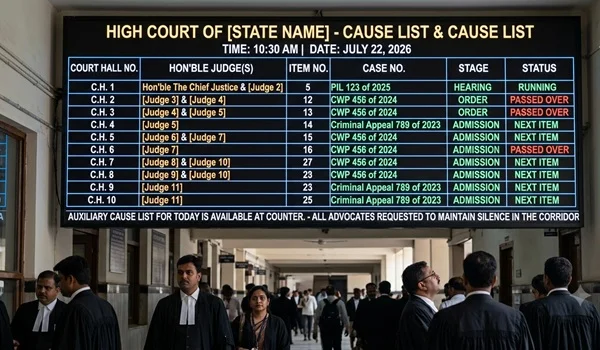
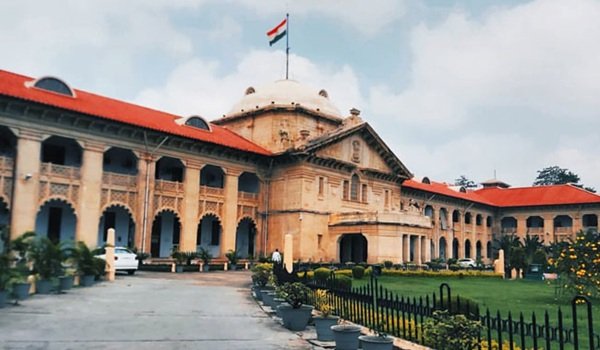
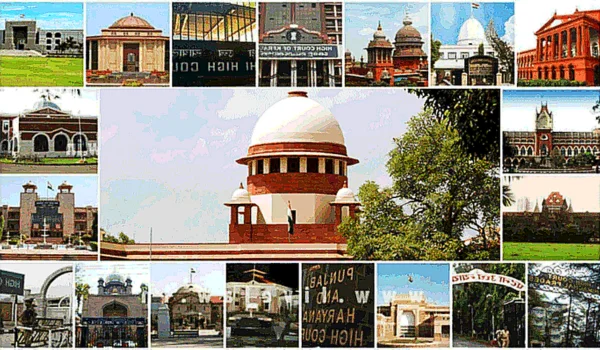
High Courts are the highest courts at the state level in India. They play a vital role in the Indian judicial system by hearing appeals from lower courts, interpreting laws, protecting constitutional rights, and supervising the functioning of subordinate courts within their jurisdiction.
India currently has 25 High Courts, each serving one or more states and union territories. Some High Courts have multiple benches to improve access to justice across different regions.
This guide provides a complete list of High Courts in India, along with their locations, establishment years, jurisdictions, principal seats, benches, and useful information for litigants, students, researchers, and anyone looking to understand the Indian judicial system.
Quick Information
| Topic | Details |
| Country | India |
| Total High Courts | 25 |
| Highest State-Level Court | High Court |
| Highest Court in India | Supreme Court of India |
| Governing Law | Constitution of India |
| Jurisdiction | States & Union Territories |
| Last Updated | 2026 |
What Is a High Court?
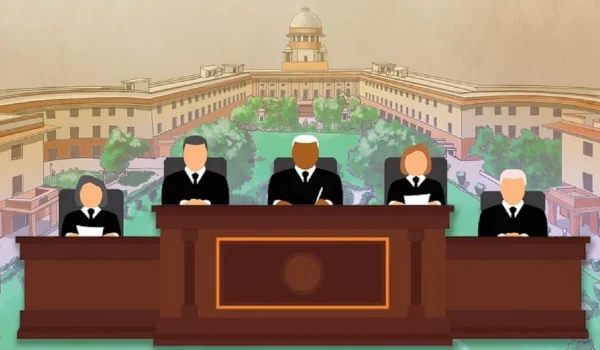
A High Court is the highest judicial authority within a state or a group of states and union territories. It hears civil, criminal, constitutional, and appellate matters while also exercising supervisory powers over District and Subordinate Courts.
Every High Court functions under the provisions of the Constitution of India and is headed by a Chief Justice along with other judges appointed by the President of India.
Role of High Courts
High Courts perform several important judicial functions, including:
- Hearing civil and criminal appeals.
- Deciding writ petitions under the Constitution.
- Supervising District and Subordinate Courts.
- Interpreting state and central laws.
- Protecting Fundamental Rights.
- Reviewing decisions of lower courts.
- Hearing Public Interest Litigations (PILs).
- Exercising judicial review over government actions.
Complete List of High Courts in India
| High Court | Principal Seat | Year Established | Jurisdiction |
| Allahabad High Court | Prayagraj | 1866 | Uttar Pradesh |
| Andhra Pradesh High Court | Amaravati | 2019 | Andhra Pradesh |
| Bombay High Court | Mumbai | 1862 | Maharashtra, Goa, Dadra & Nagar Haveli and Daman & Diu |
| Calcutta High Court | Kolkata | 1862 | West Bengal, Andaman & Nicobar Islands |
| Chhattisgarh High Court | Bilaspur | 2000 | Chhattisgarh |
| Delhi High Court | New Delhi | 1966 | National Capital Territory of Delhi |
| Gauhati High Court | Guwahati | 1948 | Assam, Nagaland, Mizoram & Arunachal Pradesh |
| Gujarat High Court | Ahmedabad | 1960 | Gujarat |
| Himachal Pradesh High Court | Shimla | 1971 | Himachal Pradesh |
| High Court of Jammu & Kashmir and Ladakh | Srinagar / Jammu | 1928 | Jammu & Kashmir, Ladakh |
| Jharkhand High Court | Ranchi | 2000 | Jharkhand |
| Karnataka High Court | Bengaluru | 1884 | Karnataka |
| Kerala High Court | Kochi | 1956 | Kerala, Lakshadweep |
| Madhya Pradesh High Court | Jabalpur | 1956 | Madhya Pradesh |
| Madras High Court | Chennai | 1862 | Tamil Nadu, Puducherry |
| Manipur High Court | Imphal | 2013 | Manipur |
| Meghalaya High Court | Shillong | 2013 | Meghalaya |
| Orissa High Court | Cuttack | 1948 | Odisha |
| Patna High Court | Patna | 1916 | Bihar |
| Punjab and Haryana High Court | Chandigarh | 1947 | Punjab, Haryana & Chandigarh |
| Rajasthan High Court | Jodhpur | 1949 | Rajasthan |
| Sikkim High Court | Gangtok | 1975 | Sikkim |
| Telangana High Court | Hyderabad | 2019 | Telangana |
| Tripura High Court | Agartala | 2013 | Tripura |
| Uttarakhand High Court | Nainital | 2000 | Uttarakhand |
State-wise High Courts
| State / Union Territory | High Court |
| Andhra Pradesh | Andhra Pradesh High Court |
| Arunachal Pradesh | Gauhati High Court |
| Assam | Gauhati High Court |
| Bihar | Patna High Court |
| Chhattisgarh | Chhattisgarh High Court |
| Delhi | Delhi High Court |
| Goa | Bombay High Court |
| Gujarat | Gujarat High Court |
| Haryana | Punjab and Haryana High Court |
| Himachal Pradesh | Himachal Pradesh High Court |
| Jammu & Kashmir | High Court of Jammu & Kashmir and Ladakh |
| Jharkhand | Jharkhand High Court |
| Karnataka | Karnataka High Court |
| Kerala | Kerala High Court |
| Ladakh | High Court of Jammu & Kashmir and Ladakh |
| Lakshadweep | Kerala High Court |
| Madhya Pradesh | Madhya Pradesh High Court |
| Maharashtra | Bombay High Court |
| Manipur | Manipur High Court |
| Meghalaya | Meghalaya High Court |
| Mizoram | Gauhati High Court |
| Nagaland | Gauhati High Court |
| Odisha | Orissa High Court |
| Puducherry | Madras High Court |
| Punjab | Punjab and Haryana High Court |
| Rajasthan | Rajasthan High Court |
| Sikkim | Sikkim High Court |
| Tamil Nadu | Madras High Court |
| Telangana | Telangana High Court |
| Tripura | Tripura High Court |
| Uttar Pradesh | Allahabad High Court |
| Uttarakhand | Uttarakhand High Court |
| West Bengal | Calcutta High Court |
| Andaman & Nicobar Islands | Calcutta High Court |
| Chandigarh | Punjab and Haryana High Court |
| Dadra & Nagar Haveli and Daman & Diu | Bombay High Court |
High Courts with Multiple Benches
Several High Courts operate permanent benches to improve access to justice across different regions.
| High Court | Major Benches |
| Allahabad High Court | Lucknow Bench |
| Bombay High Court | Nagpur, Aurangabad, Panaji |
| Karnataka High Court | Dharwad, Kalaburagi |
| Madhya Pradesh High Court | Indore, Gwalior |
| Madras High Court | Madurai |
| Rajasthan High Court | Jaipur |
| Calcutta High Court | Circuit Bench at Jalpaiguri (as notified) |
Bench locations and their jurisdictions may be revised by the judiciary from time to time.
Jurisdiction of High Courts
High Courts exercise different types of jurisdiction.
Original Jurisdiction
Some High Courts hear certain matters directly, depending on constitutional provisions and applicable laws.
Appellate Jurisdiction
High Courts hear appeals against judgments and orders passed by District and Subordinate Courts.
Writ Jurisdiction
Under Article 226 of the Constitution, High Courts can issue writs for the enforcement of Fundamental Rights and other legal rights.
The writs include:
- Habeas Corpus
- Mandamus
- Certiorari
- Prohibition
- Quo Warranto
Supervisory Jurisdiction
High Courts supervise all District and Subordinate Courts within their territorial jurisdiction.
Types of Cases Heard by High Courts
High Courts hear a wide range of cases, including:
- Civil Appeals
- Criminal Appeals
- Writ Petitions
- Public Interest Litigations (PILs)
- Service Matters
- Election Petitions
- Tax Matters
- Commercial Disputes
- Arbitration Matters
- Family Law Appeals
- Company Law Matters (where applicable)
Online Services Available
Most High Courts now provide digital services through their official websites or the eCourts ecosystem.
Common services include:
- Case Status Search
- Daily Cause List
- Judgment Search
- Orders
- e-Filing (where available)
- Case Number Search
- Advocate Information
- Certified Copy Status
The availability of services varies between High Courts.
How to Find Your High Court
If your case originates from a particular state or union territory, it will generally fall under the jurisdiction of the corresponding High Court.
For example:
| State | High Court |
| Uttar Pradesh | Allahabad High Court |
| Delhi | Delhi High Court |
| Maharashtra | Bombay High Court |
| Karnataka | Karnataka High Court |
| Tamil Nadu | Madras High Court |
| Rajasthan | Rajasthan High Court |
Future Individual High Court Guides
Each High Court can have its own detailed guide covering:
- Court History
- Address & Location
- Contact Information
- Benches
- Jurisdiction
- Chief Justice
- Court Timings
- Cause List
- Case Status
- e-Filing
- Visitor Information
- Nearby Facilities
- Frequently Asked Questions
Frequently Asked Questions
How many High Courts are there in India?
India currently has 25 High Courts.
Which is the oldest High Court in India?
The Calcutta High Court, established in 1862, is one of the oldest High Courts in India under the Indian High Courts Act, 1861.
Which High Court has jurisdiction over Delhi?
The Delhi High Court exercises jurisdiction over the National Capital Territory of Delhi.
Can one High Court serve multiple states?
Yes. Some High Courts have jurisdiction over more than one state or union territory. For example, the Punjab and Haryana High Court serves Punjab, Haryana, and the Union Territory of Chandigarh.
What is Article 226?
Article 226 of the Constitution empowers High Courts to issue writs for the enforcement of Fundamental Rights as well as other legal rights.
Can High Court decisions be appealed?
Yes. Subject to applicable laws, certain High Court decisions may be challenged before the Supreme Court of India.
Final Thoughts
High Courts form the backbone of India’s state-level judicial system, ensuring justice through constitutional interpretation, appellate review, and supervision of subordinate courts. With jurisdiction over civil, criminal, and constitutional matters, they play a crucial role in protecting citizens’ rights and maintaining the rule of law.
Whether you’re looking for your state’s High Court, researching the Indian judiciary, or preparing to access court services, this guide provides a solid starting point. As your website grows, individual guides for each High Court can further help users with location details, cause lists, case status, e-Filing procedures, court timings, and other practical information.