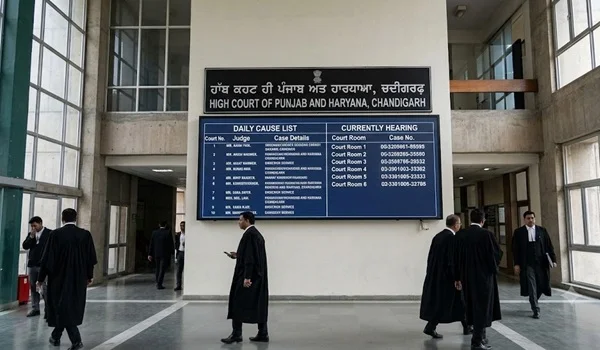
If you’ve ever visited a court, read a legal notice, or followed a court case, you’ve probably come across terms like FIR, Bail, Affidavit, Petitioner, Respondent, Plaintiff, Defendant, Warrant, and Judgment. While these words are commonly used in legal proceedings, many people find them confusing.
Understanding basic court terminology makes it easier to follow legal proceedings, communicate with lawyers, understand court documents, and navigate the judicial system with confidence.
This Court Terminology Guide explains more than 75 commonly used legal and court terms in simple language. Whether you’re a student, litigant, law aspirant, journalist, or simply curious about the Indian judicial system, this guide will serve as a useful reference.
Quick Information
| Topic | Details |
| Guide Type | Court Terminology |
| Country | India |
| Best For | Students, Litigants, Lawyers & General Public |
| Covers | Civil, Criminal & Constitutional Terms |
| Includes | 75+ Legal & Court Terms |
| Last Updated | 2026 |
Why Learn Court Terminology?

Understanding legal terminology helps you:
- Read court documents more easily.
- Understand legal notices.
- Follow court proceedings.
- Communicate effectively with advocates.
- Understand judgments and orders.
- Improve legal awareness.
A
Acquittal
A court decision declaring that an accused person is not guilty of the criminal charges.
Affidavit
A written statement made under oath or affirmation and signed before an authorized official.
Appeal
A request made to a higher court to review or change the decision of a lower court.
Appellant
The person or party who files an appeal before a higher court.
Arrest
The legal act of taking a person into custody by law enforcement authorities.
B
Bail
Temporary release of an accused person from custody under conditions specified by the court.
Bench
A judge or a group of judges hearing and deciding a case.
Burden of Proof
The legal responsibility of proving a claim or allegation before the court.
C
Case Number
A unique number assigned to every court case for identification and tracking.
Caveat
A legal notice requesting the court not to pass an order without first hearing the person who filed the caveat.
Certified Copy
An officially certified copy of a court order, judgment, or other court record.
Charge Sheet
A formal report filed by the investigating agency detailing the alleged offence and evidence against the accused.
Civil Case
A legal dispute involving private rights, property, contracts, or compensation rather than criminal offences.
Cognizable Offence
An offence in which the police can register an FIR and make an arrest without prior permission from a magistrate, as permitted by law.
Contempt of Court
Any act that obstructs or undermines the authority, dignity, or functioning of a court.
Conviction
A court’s decision finding an accused person guilty of an offence.
Court Fee
A fee payable for filing certain cases, applications, or legal documents in court.
Cross-Examination
Questioning of a witness by the opposing party during a trial.
D
Decree
The formal expression of a civil court’s decision determining the rights of the parties.
Defendant
The person against whom a civil suit is filed.
Disposed Case
A case that has been concluded by the court through a judgment, order, settlement, withdrawal, or other legally recognized method.
E
Evidence
Documents, objects, witness testimony, or other material presented before the court to prove or disprove facts.
Exhibit
A document or object formally produced before the court as evidence.
F
FIR (First Information Report)
A document prepared by the police after receiving information about a cognizable offence.
Final Order
The order issued by the court that concludes the proceedings in a case.
G
Guardian
A person legally appointed or recognized to care for another person, such as a minor or someone incapable of managing their affairs.
H
Habeas Corpus
A constitutional writ directing that a person alleged to be unlawfully detained be produced before the court.
Hearing
A scheduled court proceeding during which the parties present their arguments or evidence.
I
Injunction
A court order directing a person to do or refrain from doing a specific act.
Interim Order
A temporary order passed by the court before the final decision in a case.
Investigation
The process of collecting evidence and facts relating to an alleged offence.
J
Judge
A judicial officer appointed to hear cases, interpret the law, and deliver judgments.
Judgment
The final decision or reasoning delivered by a court after hearing a case.
Judicial Magistrate
A judicial officer who handles various criminal matters as provided under law.
Jurisdiction
The legal authority of a court to hear and decide a particular case.
L
Litigant
A person or organization involved in a legal case.
Litigation
The process of resolving disputes through the court system.
M
Magistrate
A judicial officer empowered to hear and decide certain criminal and other matters.
Mediation
A method of resolving disputes with the help of a neutral third person called a mediator.
N
Non-Cognizable Offence
An offence in which the police generally require permission from the magistrate before commencing an investigation, subject to applicable law.
Notice
An official communication informing a person about legal proceedings or requiring a particular action.
O
Order
A direction or decision issued by the court during the course of proceedings.
P
Party
Any individual, company, or organization involved in a legal case.
Petitioner
The person who files a petition before the court.
Petition
A formal written request submitted to a court seeking legal relief.
Plaintiff
The person who files a civil suit.
Pleading
The formal written statements filed by the parties outlining their claims or defenses.
Public Interest Litigation (PIL)
A legal proceeding initiated to protect or enforce matters affecting the public interest.
R
Respondent
The person or authority against whom a petition or appeal is filed.
Revision Petition
A request asking a higher court to examine the legality or correctness of an order passed by a lower court.
S
Sentence
The punishment imposed by a court after a criminal conviction.
Sessions Court
A court that hears serious criminal cases and certain appeals.
Stay Order
An order temporarily suspending the operation or implementation of another order or proceeding.
Summons
A legal document directing a person to appear before the court.
T
Testimony
A statement made by a witness under oath during legal proceedings.
Trial
The judicial process in which evidence is examined and arguments are heard before a decision is made.
V
Vakalatnama
A document authorizing an advocate to represent a party before the court.
Verdict
The formal decision reached in a case. In Indian courts, the term judgment is more commonly used.
W
Warrant
A written authorization issued by a competent court allowing a specific legal action, such as arrest or search, in accordance with law.
Witness
A person who gives evidence before the court.
Written Statement
The written reply filed by the defendant in response to a civil suit.
Writ
A constitutional order issued by the Supreme Court or a High Court to protect legal or Fundamental Rights.
Five Constitutional Writs
| Writ | Purpose |
| Habeas Corpus | Protects against unlawful detention |
| Mandamus | Directs a public authority to perform a legal duty |
| Certiorari | Quashes an order of a lower court or tribunal in appropriate cases |
| Prohibition | Prevents a lower court or tribunal from exceeding its jurisdiction |
| Quo Warranto | Challenges a person’s legal authority to hold a public office |
Common Court Abbreviations
| Abbreviation | Meaning |
| FIR | First Information Report |
| PIL | Public Interest Litigation |
| CNR | Case Number Record |
| CJI | Chief Justice of India |
| SLP | Special Leave Petition |
| CPC | Code of Civil Procedure |
| CrPC* | Code of Criminal Procedure (for cases governed before the Bharatiya Nagarik Suraksha Sanhita transition) |
| BNSS | Bharatiya Nagarik Suraksha Sanhita |
| BNS | Bharatiya Nyaya Sanhita |
| BSA | Bharatiya Sakshya Adhiniyam |
Depending on when a case was instituted, you may still encounter references to older procedural laws alongside the newer criminal law framework.
Civil vs Criminal Terms
| Civil Cases | Criminal Cases |
| Plaintiff | Accused |
| Defendant | Prosecution |
| Plaint | FIR / Complaint |
| Decree | Conviction / Acquittal |
| Injunction | Sentence |
| Compensation | Punishment |
Terms Every Citizen Should Know
If you’re dealing with any legal matter, these are some of the most important terms to understand:
- FIR
- Bail
- Affidavit
- Petition
- Plaintiff
- Defendant
- Petitioner
- Respondent
- Warrant
- Judgment
- Order
- Appeal
- Summons
- Jurisdiction
- Vakalatnama
- Cause List
- CNR Number
- Evidence
- Trial
- Stay Order
Frequently Asked Questions
What is the difference between a petitioner and a plaintiff?
A petitioner files a petition, while a plaintiff files a civil suit.
What is an affidavit?
An affidavit is a written statement made under oath or affirmation and submitted as evidence or supporting material in legal proceedings.
What is a stay order?
A stay order temporarily suspends the operation of a decision, order, or legal proceeding until further directions from the court.
What is a vakalatnama?
A vakalatnama is a document authorizing an advocate to represent a party before the court.
What is jurisdiction?
Jurisdiction is the legal authority of a court to hear and decide a particular case.
Final Thoughts
Legal terminology can seem complicated at first, but understanding commonly used court terms makes it much easier to navigate the Indian judicial system. Whether you’re reading a judgment, filing a petition, following a court case, or simply improving your legal awareness, knowing the meaning of terms like FIR, bail, jurisdiction, affidavit, and appeal can help you better understand how courts function.
Keep this guide bookmarked as a quick reference whenever you encounter unfamiliar legal or court-related terms.