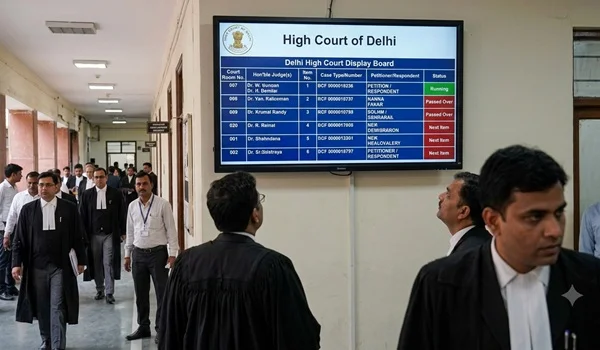
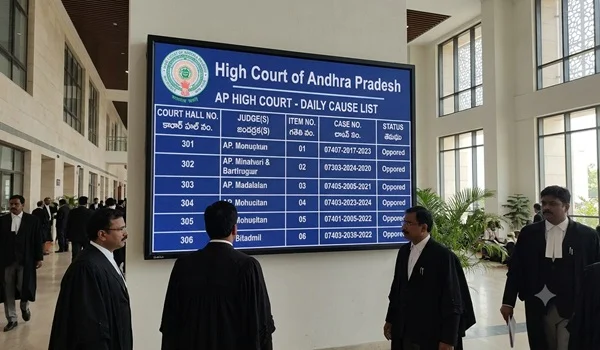
A High Court Display Board is an electronic digital screen installed inside or outside High Court premises to provide real-time case-related information to advocates, litigants, court staff, and visitors. Instead of relying on printed cause lists or making repeated inquiries, people can quickly check courtroom numbers, case status, hearing schedules, and other important announcements on the display board.
With Indian courts increasingly adopting digital technologies under the e-Courts initiative, High Court display boards have become an essential part of modern court infrastructure. They improve transparency, reduce confusion, and help visitors navigate the court premises more efficiently.
What is a High Court Display Board?
A High Court Display Board is a digital information system that displays live court-related updates. These boards are usually LED or LCD screens connected to the court’s case management software, ensuring that information is updated automatically throughout the day.
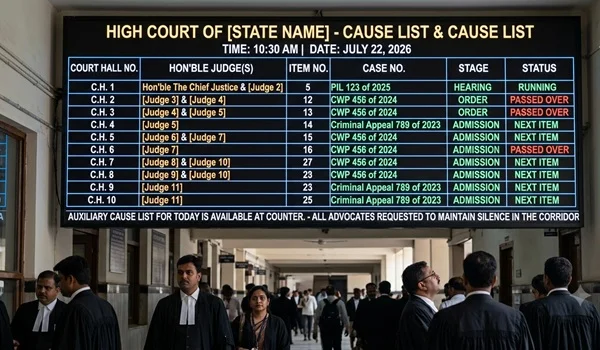
The displayed information may include:
- Courtroom numbers
- Case numbers
- Cause list
- Judge names
- Hearing status
- Next case in line
- Court announcements
- Public notices
The information is refreshed in real time, making it easier for everyone to stay informed.
Why is a High Court Display Board Important?
High Courts handle thousands of cases every day. Without a centralized information system, lawyers and litigants would have to depend on printed lists or manual inquiries.
A digital display board helps by:
- Providing instant access to hearing information
- Reducing crowding around inquiry counters
- Improving courtroom management
- Saving time for advocates and litigants
- Increasing transparency in court proceedings
- Minimizing confusion regarding case movement
Information Displayed on a High Court Display Board
Depending on the court’s digital infrastructure, the display board may show:
- Daily Cause List
Displays the list of cases scheduled before each bench for the day.
- Court Number
Shows the courtroom where the case will be heard.
- Bench Details
Displays the names of judges hearing the matter.
- Case Number
Shows the complete case number for easy identification.
- Party Names
Displays the names of petitioners and respondents.
- Current Hearing Status
Shows whether the case is:
- In Progress
- Called
- Awaited
- Adjourned
- Disposed
- Reserved for Orders
- Serial Number
Indicates the order in which cases will be taken up.
- Important Notifications
Courts may also display:
- Holiday notices
- Court timing changes
- Emergency announcements
- Administrative circulars
How Does a High Court Display Board Work?
The display board is integrated with the court’s Case Information System (CIS). As court staff update case proceedings in the system, the information automatically appears on the display screens.
The process generally works as follows:
- Court staff update case information.
- The Case Information System processes the data.
- The digital display board receives the latest updates.
- Visitors can instantly view current case information.
This automation minimizes manual errors and ensures timely updates.
Benefits of High Court Display Boards
Better Transparency
Real-time updates allow everyone to access the same information without relying on unofficial sources.
Time Saving
Advocates and litigants no longer need to repeatedly visit inquiry counters.
Improved Court Management
Digital boards help regulate the movement of lawyers and visitors throughout the court premises.
Reduced Paper Usage
Electronic displays reduce dependence on printed cause lists and notices.
Easy Navigation
Visitors can quickly identify the correct courtroom and hearing schedule.
Better Public Communication
Courts can instantly communicate important announcements through display boards.
Who Uses High Court Display Boards?
The display boards are useful for:
- Advocates
- Litigants
- Government lawyers
- Court staff
- Law interns
- Police officials
- Journalists covering court proceedings
- General visitors
Difference Between a High Court Display Board and Online Case Status
| High Court Display Board | Online Case Status |
| Available inside court premises | Accessible from anywhere |
| Shows live courtroom updates | Shows case details online |
| Helps visitors locate courtrooms | Helps users track case progress remotely |
| Displays announcements | Focuses mainly on case records |
Both systems complement each other and improve access to judicial information.
Features of Modern High Court Display Boards
Modern display boards often include:
- LED or LCD digital screens
- Real-time case updates
- Multiple language support
- Auto-refresh functionality
- Integration with court software
- Queue management
- Scrolling announcements
- High-resolution display
- Multiple screen synchronization
Challenges
Although highly useful, some courts may face challenges such as:
- Temporary network failures
- Delayed updates due to technical issues
- Hardware maintenance requirements
- Power interruptions
- Limited digital infrastructure in older court buildings
Most High Courts have dedicated IT teams to resolve such issues promptly.
Role in the Digital Transformation of Indian Courts
The introduction of digital display boards is part of the broader modernization of India’s judiciary. Along with e-filing, virtual hearings, online case status tracking, and electronic cause lists, display boards contribute to making court services more transparent, efficient, and user-friendly.
They reduce dependency on manual processes while improving the overall experience for advocates and litigants.
Frequently Asked Questions (FAQs)
What is a High Court Display Board?
It is a digital screen installed within High Court premises that displays live information about court proceedings, case status, courtroom numbers, and announcements.
Is the information updated in real time?
Yes. Most High Court display boards receive automatic updates from the court’s case management system.
Can visitors rely on the display board for courtroom information?
Yes. It is one of the primary sources for checking the latest courtroom allocation and hearing status inside the court premises.
Does every High Court have a display board?
Most major High Courts have digital display boards, though the number and features may vary depending on the court’s infrastructure.
Can I check the same information online?
Many case details are available through the respective High Court website and the e-Courts portal, but the display board often provides the most current courtroom updates during court hours.
Conclusion
A High Court Display Board is an essential digital information system that simplifies access to court proceedings and improves the overall efficiency of judicial administration. By displaying real-time case information, courtroom details, and important announcements, these boards save time for advocates, litigants, and visitors while promoting transparency and better court management. As India’s judiciary continues to embrace digital transformation, High Court display boards will remain a vital tool for delivering timely and accurate information within court premises.